
It's Monday morning and you're checking last week's hours. One timesheet shows an IN on Thursday and no OUT. Another has a Saturday shift with no punches at all, even though you remember that person working. Someone forgot to clock in, someone else forgot to clock out, and now you're piecing together a week from memory and text messages.
If this happens every pay period, you don't need stricter people. You need a better setup and a clear missed punch policy.
In this article, you'll learn why missed punches happen, five practical ways to prevent them, how to write a simple policy for fixing them, and a short template you can adapt for your own team.
Why Employees Forget to Clock In or Out
When an employee forgot to clock in, it's tempting to call it carelessness. But when it happens again and again, the cause is usually the workplace setup, not the person.
The time clock isn't on the way in
If the clock sits in a back office or down a hallway nobody uses, people walk right past it. They head straight to their station, get busy, and the punch never happens.
Shift changes create a rush at the clock
At shift change, several people arrive and leave at once. Some wait in line, some skip it planning to "do it later," and later never comes.
Clocking in takes too many steps
Logging in with a username, typing a PIN, finding the right screen: every extra step is a chance to get interrupted or give up. The harder it is, the more often it gets skipped.
Nobody notices until payroll day
A missing punch on Tuesday is easy to fix on Tuesday. By payroll cutoff, nobody remembers exactly when they left, and you end up with guesses instead of records.
5 Ways to Reduce Missed Punches Before They Happen
Fixing missed punches takes time. Preventing them takes a few small changes.
1. Put the kiosk where people actually walk
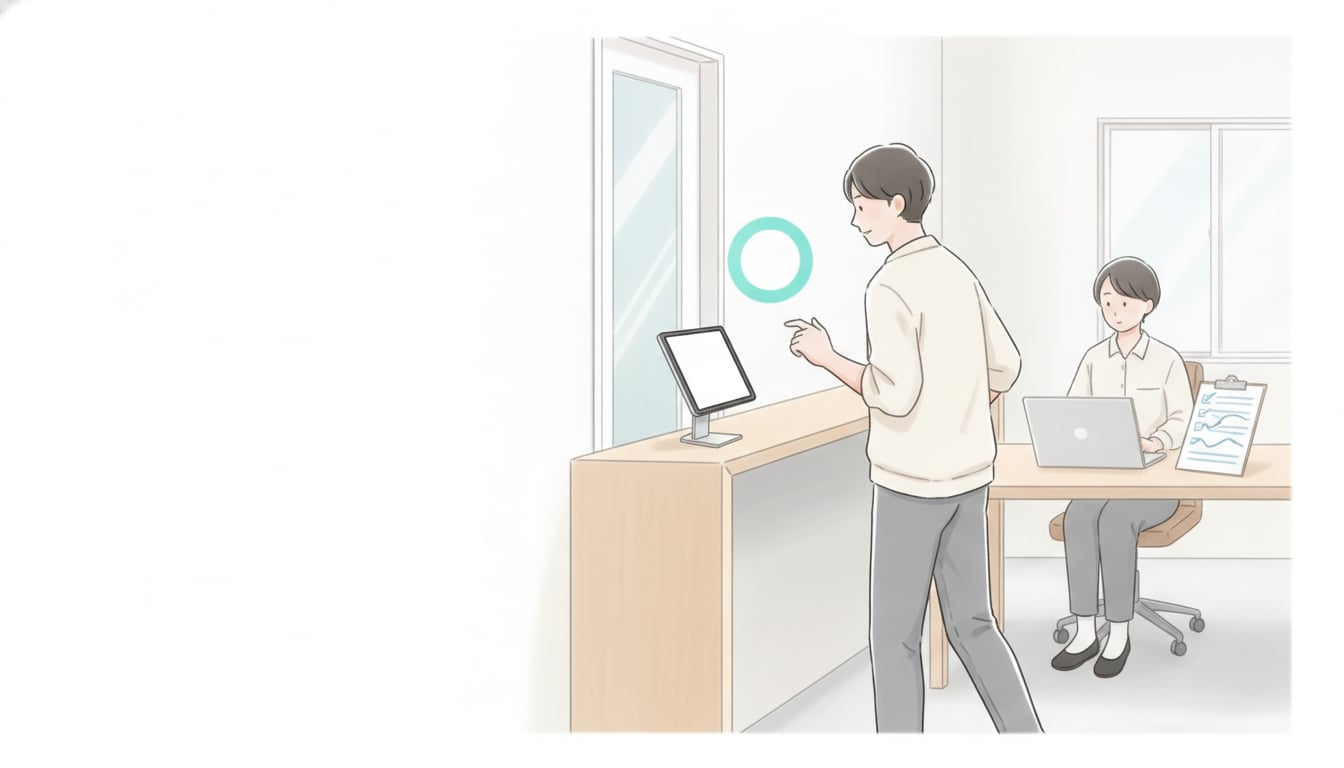
Place your time clock right at the entrance staff use every day, at eye level, where nobody can miss it. If people pass it on the way in and on the way out, punching becomes part of walking through the door.
2. Tie clocking in to one routine moment
Pick one moment that happens every shift and attach the punch to it. For example: "Clock in before you change into your uniform," or "Clock in before you open the register." A clear habit beats a general reminder to "remember to clock in."
3. Make it a one-tap action with no passwords to remember
Forgotten passwords and slow logins are a common reason people skip the clock. A shared kiosk where staff tap their name to clock in and out removes that friction.
4. Use reminders
Reminder notifications give people a nudge when a punch is missing. They won't catch everything, but they catch a lot before it turns into a payroll problem.
5. Do a 2-minute daily check for open punches
At the end of each day, or first thing the next morning, look for anyone with an IN and no OUT. It takes two minutes, and the shift is still fresh in everyone's mind. This one habit will save you hours at payroll time.
How to Write a Missed Punch Policy
Even with a good setup, punches will still be missed now and then. A written missed punch policy makes sure everyone handles them the same way, every time.
What the law expects: accurate records of hours worked
According to the U.S. Department of Labor's Fact Sheet #21 on FLSA recordkeeping, employers must keep records of hours worked each day and total hours worked each workweek. The DOL also says any timekeeping plan is acceptable as long as it is complete and accurate.
That means the goal of your policy isn't to punish missed punches. It's to make sure the record ends up showing the hours people actually worked.
This matters because of another DOL rule. Fact Sheet #22 says work not requested but "suffered or permitted" to be performed is work time that must be paid. So if someone worked a shift but forgot to clock in, you can't just leave those hours at zero. The work happened, and the record needs to be fixed.
State laws may add their own requirements on top of the federal rules. Check with your state labor agency or an employment attorney before you finalize your policy.
The 3 parts of a good policy: report, verify, document
Report. Spell out who the employee tells, by when, and what they share. For example: tell your shift manager within 24 hours, with the actual start or end time and a short reason.
Verify. Decide what the manager checks the reported time against. Useful sources include the posted schedule, register open and close times, door access logs, or a coworker who was on the same shift.
Document. Keep a record of the original entry, the corrected entry, who made the correction, when, and why. Have the employee acknowledge the corrected time, with a signature or a written reply.
Missed punch correction: a step-by-step example
Here's how a missed punch correction might work from start to finish:
- The employee notices the missed punch, or the manager spots it during the daily check.
- The employee reports it to their manager within the deadline, with the actual time and a reason.
- The manager verifies the time against the schedule, register records, or another reliable source.
- The manager records the correction, noting the original entry, the new time, who changed it, and why, and the employee confirms it.
- The corrected record is saved before payroll is processed, so the paycheck matches the hours worked.
What to avoid in your policy
A few habits cause more trouble than the missed punch itself:
- Editing time without telling the employee. Changes should always be visible to the person whose hours they are.
- Auto-filling scheduled hours. A schedule shows when someone was supposed to work, not when they did. Fill in the actual time.
- Docking pay for the missed punch itself. Pay is for hours worked. If you want consequences for repeated missed punches, have those rules reviewed by an HR professional or an employment attorney first.
Simple Missed Punch Policy Template
Here's a short sample you can adapt. Replace the bracketed parts with your own details.
Missed Punch Policy
- All employees must clock in at the start of each shift and clock out at the end, using the time clock at [location].
- If you miss a punch, tell [Manager name] within [24 hours], including the actual time you started or finished and the reason.
- Your manager will check the time against the schedule and other available records before making a correction.
- Every correction will record the original entry, the corrected time, who made the change, the date, and the reason.
- You will be asked to confirm each correction to your hours.
- You will be paid for all hours you actually worked, including time on a shift with a missed punch.
- Questions about this policy go to [Manager name or HR contact].
Keep it short enough that people will actually read it, and post it near the time clock.
How a Tablet Kiosk Helps
Time Clock App turns one shared tablet at your entrance into a time clock. Staff tap the kiosk to clock in and out, with no individual login, so there are no passwords to forget. Reminder notifications help prevent missed punches before they reach payroll, and attendance data exports as CSV or Excel, so you can bring hours straight into your payroll routine.
You can try full team operations with unlimited members free for 30 days. See the pricing details for plan information.
The Bottom Line
Missed punches aren't a character flaw. They're usually a sign that the clock is in the wrong place, takes too many steps, or doesn't get checked until it's too late. Fix the setup first, then put a simple missed punch policy in writing: report, verify, document. Check for open punches daily or weekly, and your payroll records will stay complete and accurate with far less end-of-period scrambling.
Get Time Clock App today


Related Articles